
Culture
Valplekar: The Hidden Tapestry of Heritage and Modern Meaning

Introduction
The word valplekar might not appear in everyday conversation, yet this curious term carries surprising depth, cultural resonance, and an evolving presence in both historical and contemporary contexts. Whether encountered as a surname rooted in regional identity or discovered as a linguistic fragment with layered meanings, valplekar stands as a testament to how language carries history, belonging, and transformation. In an age where global mobility and digital connection continually reshape how we understand heritage and identity, exploring a term like valplekar reveals fascinating intersections between past and present, tradition and innovation.
Origin stories for uncommon names and concepts often reveal more than just etymology — they show how people tie to places, communities, and shared experiences. Valplekar exemplifies this dynamic, illustrating how a simple word or name can become a lens through which entire cultural narratives are understood and appreciated.
What Is Valplekar
At its core, valplekar has dual significance: one as a traditional Indian surname that reflects geographic and cultural identity, and another as a linguistic term with roots in Nordic languages, particularly Swedish. As a surname, valplekar is emblematic of how naming conventions historically linked individuals to specific places or community identifiers. In western Indian states such as Maharashtra, Goa, and Karnataka, the suffix “-kar” in many traditional surnames indicates belonging to a particular village or region — suggesting that those bearing the name valplekar were historically associated with a place called Valple or a similar-rooted locale. The retention of such surnames over generations underscores the deep human desire to preserve lineage, community ties, and ancestral memory.
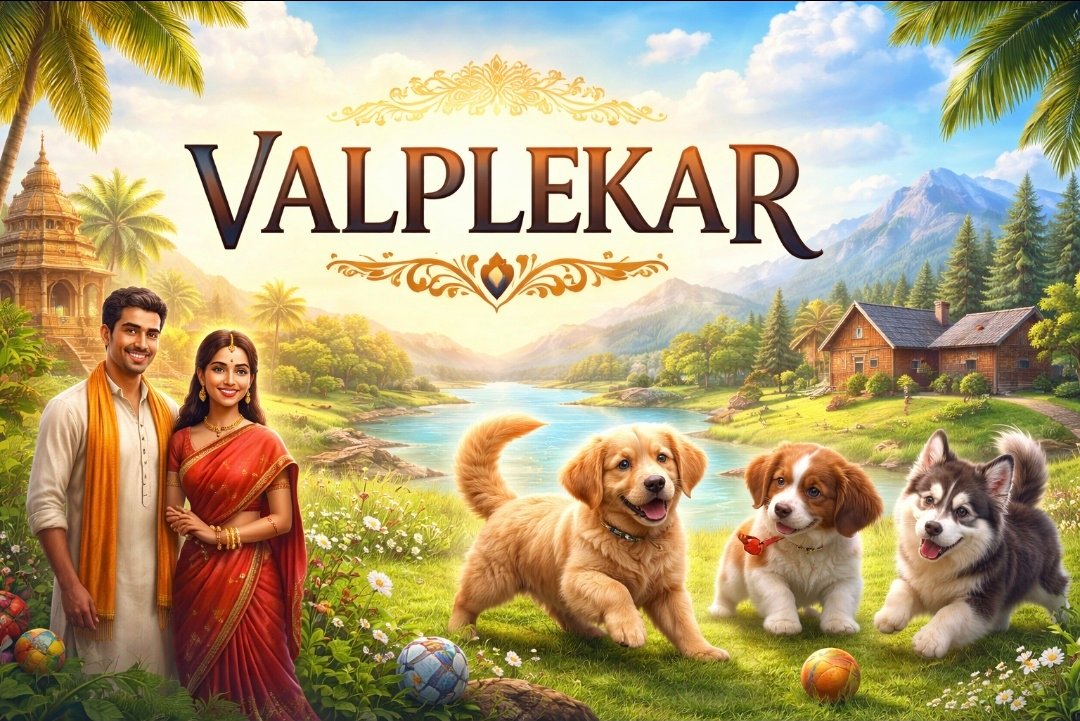
Linguistically, valplekar takes on a distinctly different yet equally intriguing meaning in Swedish, where “valp” means puppy and “lekar” translates to play. Together, they create an expressive phrase that underscores the crucial role of play in early canine development — not merely as amusement, but as a foundational practice for social, emotional, and cognitive growth in puppies. This layered meaning of valplekar — as both a carrier of deep-rooted heritage and a descriptor of playful learning — makes the term uniquely multifaceted.
The Surname Valplekar: Roots and Cultural Identity
In many Indian linguistic traditions, names carry structural cues about origin, profession, caste, or community association. The surname valplekar fits this pattern, with its suffix conveying place-based identity. Historically, this type of naming helped communities navigate social structures, connect individuals to ancestral land, and preserve histories that otherwise risked fading from collective memory. The name became more than just a label: it served as a living thread through which family stories, traditions, and cultural values continued across generations.
Beyond geographic markers, surnames like valplekar have cultural implications. They anchor individuals within community frameworks where family history, occupation, and heritage intertwine. In regions where oral traditions often preceded written ones, surnames became functional archives of lineage, telling stories about ancestral life, migrations, social standing, and even ancient economic roles. This layered significance transforms a surname like valplekar into something far richer than a mere identifier — it becomes a vessel for cultural continuity.
Migration, Diaspora, and Global Presence
With the rise of global migration over the past century, traditional surnames such as valplekar traveled beyond their original cultural landscapes. Today, individuals bearing this name can be found in diverse parts of the world, in nations including the United States, the United Kingdom, Canada, and others with significant Indian diaspora communities. Although detached from their geographic origins, many diaspora families continue to cherish traditional surnames as a connection to heritage. These names provide continuity in identity, anchoring individuals in their ancestral narratives even as they integrate into new societies.
For many, retaining a surname like valplekar in a global context represents more than cultural nostalgia; it signifies resilience and pride. It affirms an individual’s link to an enduring cultural lineage and reminds future generations of where their family came from. Across continents, such names help preserve linguistic, social, and historical identities that might otherwise be diluted in the melting pot of modern multiculturalism.
Valplekar in Linguistic Studies and Cultural Narratives
Beyond personal identity, valplekar offers linguistic scholars a fascinating case study. Analyzing how such terms originate, evolve, and persist provides insight into broader patterns of language development and cultural exchange. Names like valplekar reveal how linguistic elements — such as locative suffixes — tell stories about community structures, migration patterns, and linguistic adaptation over time.
Studying the evolution of naming conventions also highlights the dynamic relationship between language and identity. While languages may change and societies evolve, certain root structures endure, carrying meaning far beyond their original context. This endurance reflects the power of language not only as a communication tool but as a repository of cultural memory. Through this lens, valplekar illustrates how even uncommon words or names can offer profound insight into human history and social evolution.
Valplekar as a Swedish Concept of Puppy Play
Interestingly, outside its identity as a surname, valplekar occupies an entirely different space in Swedish linguistic tradition, where it literally means “puppy play.” In this context, valplekar describes a deliberate philosophy surrounding canine development — one that elevates play beyond mere entertainment. Play is understood as an essential activity that fosters physical coordination, emotional resilience, social skills, and cognitive growth in puppies.
In Sweden and other parts of Scandinavia, where animal welfare and behavioral understanding have long been priorities in animal training, valplekar is embraced as a framework that blends structured activities with natural instincts. These activities — from interactive games to sensory exploration — help puppies develop confidence, impulse control, and emotional balance. This concept of valplekar underscores the idea that early-life play is crucial, not trivial, and plays a formative role in ensuring a well-rounded, adaptable adult dog.
Moreover, the term’s adoption in modern canine training reflects wider cultural appreciation for play as education. It reveals how societies that value thoughtful animal rearing have shifted away from rigid, punishment-based techniques toward more empathetic, science-informed approaches. Valplekar, in this sense, symbolizes intentional care and mutual respect in human-animal interactions.
The Modern Resonance of Valplekar
In recent years, valplekar has attracted attention in varied contexts beyond personal names and canine development. In some digital, creative, and linguistic communities, the term functions as a unique label — a metaphorical identifier for concepts that emphasize adaptability, identity, and innovative thinking. Its unusual phonetic structure and cultural ambiguity make valplekar appealing as a distinct and memorable term in branding, conceptual discussion, and creative naming.
This modern resonance underscores how language evolves and adapts. Words and names that once belonged strictly to specific cultures can acquire new layers of meaning as they are encountered by broader audiences. In the digital era, valplekar’s adaptability reflects a trend where communities adopt unique linguistic artifacts to express emerging ideas, identity markers, or conceptual frameworks.
Valplekar and Human Identity in a Global Age
What makes valplekar especially compelling is not simply its unusual construction, but what it reveals about human identity in a global age. Whether interpreted as a surname rooted in regional heritage or a term describing essential developmental play for puppies, valplekar highlights the intertwined nature of tradition and evolution. It reminds us that names and words carry stories — stories of place, of community, of belonging, and of change.
At a time when individuals often seek deeper meaning in their personal narratives, valplekar stands as an example of how even the most obscure terms can anchor us in history while inviting us to explore new interpretations. It invites reflection on how ancestral identities survive across time, how language adapts to new needs, and how shared stories shape collective understanding of who we are and where we come from.
Conclusion
Valplekar is a term that transcends simplicity. It embodies heritage, belonging, play, and cultural transformation. As a surname, it connects individuals to ancestral roots and preserves narratives of identity that span generations. As a linguistic artifact, it captures the playful spirit of early life and the intentional care found in thoughtful training philosophies. In modern contexts, it serves as a versatile label that inspires creativity, conceptual exploration, and identity building.
Ultimately, valplekar reflects the enduring power of language to shape human experience — connecting past and present, place and person, tradition and innovation. In a world in constant flux, such terms remind us that every word, no matter how uncommon, holds a tapestry of stories waiting to be understood.
FAQs
What is the origin of the surname valplekar?
The surname valplekar likely originated in western India, where suffixes like “-kar” indicate belonging to a specific place, community, or region in languages such as Marathi or Konkani.
Does valplekar have a meaning outside of naming?
Yes, in Swedish, valplekar literally means “puppy play,” signifying intentional playful interactions important for canine development.
Is valplekar a common surname?
Valplekar is relatively rare globally but holds cultural significance in certain Indian regions.
How does valplekar contribute to puppy development?
Valplekar emphasizes play that enhances socialization, emotional resilience, coordination, and confidence in puppies — foundational elements of healthy growth.
Can valplekar be used in modern conceptual discussions?
Yes, the term has been adopted in creative, linguistic, and digital communities as a unique label symbolizing adaptability, identity, and innovative expression.
READ MORE: brandi loge: Life, Career, and Reinvention Story and Impacts
Few human inventions have survived for thousands of years while remaining relevant in the modern world. Çievri is one of them. Shaped from earth, buried underground, and preserved through generations, çievri represents cultural heritage, craftsmanship, and harmony with nature. It is not simply a clay container—it is a symbol of identity deeply rooted in the history of Georgia.
In this comprehensive guide, you’ll explore what çievri truly is, where it originated, how it functions, why it matters culturally and environmentally, and how it continues to influence traditional craftsmanship around the world. Whether you’re interested in history, culture, sustainability, or ancient technology, this article will give you a clear and engaging understanding of çievri and its lasting significance.
Quick Bio
| Field | Details |
|---|---|
| Name | Çievri (also spelled Qvevri or Kvevri) |
| Origin | Georgia |
| Estimated Origin Date | Around 6000 BCE |
| Primary Use | Traditional underground clay storage and fermentation vessel |
| Material | Natural clay (terracotta) |
| Shape | Egg-shaped, buried underground |
| Cultural Recognition | Recognized by UNESCO in 2013 as Intangible Cultural Heritage |
| Traditional Regions | Kakheti, Imereti, Guria |
| Capacity Range | 20 liters to over 3,500 liters |
| Crafting Method | Hand-built, sun-dried, kiln-fired |
The Origins of Çievri: An 8,000-Year Heritage
Archaeological discoveries in Georgia reveal that clay vessels resembling modern çievri date back nearly 8,000 years. These findings position Georgia among the earliest known centers of agricultural fermentation and food preservation. Long before modern containers existed, communities relied on locally sourced clay to create durable storage solutions.
The development of çievri was not accidental. It evolved through centuries of observation and practical experimentation. Families passed down crafting knowledge from generation to generation. Clay was carefully selected from specific soils, shaped by hand, and fired in traditional kilns. The result was a vessel strong enough to last decades—sometimes even centuries.
This continuity explains why çievri remains relevant today. It connects modern society to ancient craftsmanship in a tangible, meaningful way.
What Exactly Is a Çievri?
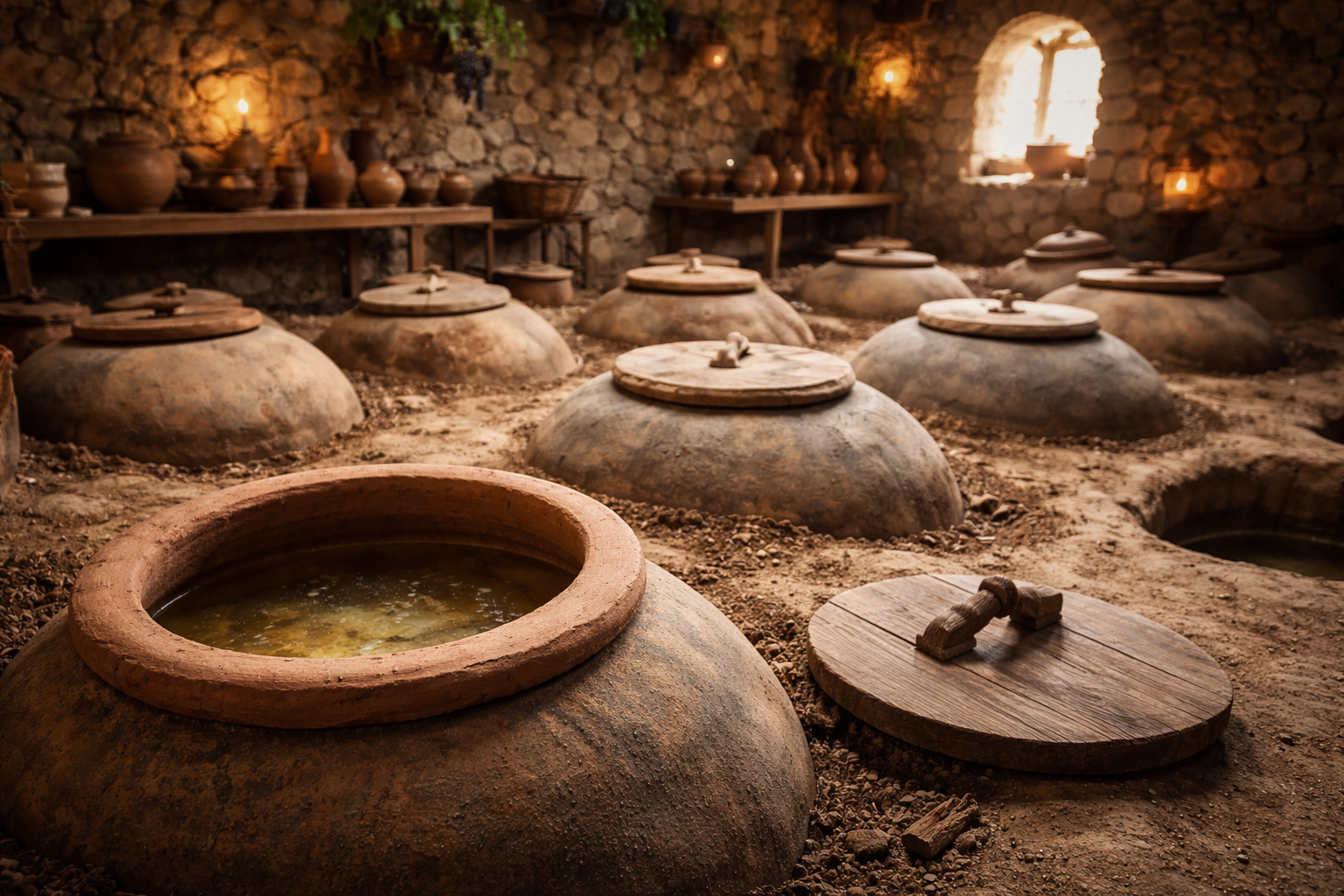
A çievri is a large, egg-shaped clay vessel designed to be buried underground. Its distinctive oval structure is not decorative; it serves a practical function. The rounded form allows natural circulation of contents during fermentation or storage, while underground placement provides consistent temperature control throughout the year.
Unlike modern containers made of metal or plastic, çievri is crafted entirely from natural clay. It is sealed with a stone or wooden lid and covered with earth to protect its contents. This traditional method offers stability, protection, and long-term preservation without reliance on electricity or mechanical systems.
The design demonstrates how ancient communities combined simplicity with efficiency.
Why the Shape and Burial Matter
The egg shape of çievri encourages internal movement within the vessel. During natural fermentation processes, materials rise and fall in a gentle cycle. This movement helps create balance and uniformity without mechanical stirring.
Burial underground adds another advantage: temperature consistency. Soil acts as a natural insulator, protecting the contents from extreme weather changes. Even when air temperatures shift dramatically, the interior remains stable.
Think of çievri as nature’s original climate-controlled container. It requires no external power source. Instead, it relies on earth itself to maintain equilibrium. This sustainable approach remains one of its strongest benefits.
Çievri in Georgian Culture and Daily Life
In Georgia, çievri is far more than a storage vessel. It represents hospitality, tradition, and family heritage. Many rural homes historically maintained a small cellar known as a “marani,” where these clay containers were installed.
Community gatherings and celebrations often involved foods and beverages prepared using çievri methods. The vessel symbolized abundance and unity. Knowledge of its construction and maintenance was treated with respect and passed down carefully.
In 2013, UNESCO officially recognized traditional Georgian qvevri craftsmanship as Intangible Cultural Heritage. This acknowledgment highlighted not only the vessel itself but also the skills, rituals, and cultural practices surrounding it.
Such recognition underscores its deep importance to national identity.
The Traditional Process Inside a Çievri
Historically, agricultural products such as crushed fruits were placed into the çievri along with skins and natural elements. Fermentation occurred naturally, relying on microorganisms present on the fruit surface. No artificial additives were required.
After the active process concluded, the vessel was sealed. Over time, solid particles settled naturally to the bottom, allowing the liquid to clarify. The underground environment supported gradual development and preservation.
This method reflects a patient, hands-off philosophy. Rather than forcing rapid results, communities trusted time and nature to do the work. The approach required careful cleaning and preparation of the vessel before and after each use, demonstrating respect for craftsmanship and hygiene.
Regional Variations Within Georgia
Although the overall design of çievri remains consistent, regional techniques differ slightly across Georgia. Areas such as Kakheti traditionally favored extended fermentation periods, while Imereti used more restrained approaches.
Local soil types also influenced clay composition. This meant vessels from different regions had subtle variations in thickness, color, and porosity. Indigenous fruit varieties contributed further uniqueness.
These regional differences showcase how a single invention can adapt to diverse local environments while preserving its core identity.
Craftsmanship: How a Çievri Is Made
Creating a çievri requires patience and expertise. The process begins with selecting high-quality clay, which is filtered and purified. Artisans then build the vessel coil by coil, layer by layer. Each section must partially dry before the next is added.
Once fully shaped, the vessel dries for weeks. It is then fired in a large kiln at carefully controlled temperatures. Improper firing can cause cracks, making the entire effort unsuccessful.
Some craftsmen coat the interior with beeswax to enhance durability and sanitation. The finished vessel may weigh hundreds of kilograms. Installing it requires careful excavation and alignment within the cellar floor.
This is not factory production. It is handcrafted tradition preserved by dedicated families and workshops.
Environmental and Sustainability Benefits
Çievri aligns naturally with environmentally responsible practices. Its materials are biodegradable and locally sourced. It does not require electricity for temperature control. It can be reused for decades with proper care.
Modern industries often prioritize speed and convenience. Çievri emphasizes longevity and balance. Because the vessel is buried, it integrates seamlessly into the landscape rather than dominating it.
As sustainability becomes increasingly important worldwide, ancient methods like çievri feel surprisingly forward-thinking.
Global Revival and Modern Interest
In recent decades, interest in traditional clay vessels has grown globally. Artisans and agricultural producers across Europe, North America, and Australia have experimented with underground clay containers inspired by çievri.
This revival reflects a broader desire to reconnect with natural processes and historical craftsmanship. While many modern adaptations exist, authentic çievri remains closely associated with Georgia’s cultural roots.
The global attention has also helped support local Georgian craftsmen, ensuring the survival of their skills.
Common Misconceptions About Çievri
Some people assume çievri is outdated or purely symbolic. In reality, it remains fully functional and relevant. Others believe it produces unpredictable results. However, when handled correctly, the method is remarkably consistent.
Another misconception is that it requires advanced technology to maintain. The opposite is true. Its strength lies in simplicity. Proper cleaning, sealing, and monitoring are essential, but no complex machinery is needed.
Understanding these realities helps appreciate the vessel’s practical value.
Why Çievri Still Matters Today
Çievri represents more than ancient engineering. It embodies resilience. It shows how communities can develop sustainable solutions using local materials and natural principles.
In a fast-paced world driven by industrial production, çievri reminds us that slow methods can be powerful. It bridges past and present. It honors tradition while remaining functional in modern contexts.
Its continued use demonstrates that innovation does not always require abandoning history. Sometimes, the most enduring solutions are those refined over thousands of years.
Conclusion
Çievri stands as one of humanity’s oldest surviving clay vessel traditions. Originating in Georgia around 6000 BCE, it has endured through centuries of cultural change. Its egg-shaped design, underground placement, and handcrafted construction reflect a deep understanding of natural balance.
Recognized by UNESCO and celebrated globally, çievri remains a symbol of heritage, sustainability, and craftsmanship. It proves that ancient knowledge still holds value in modern times.
If you ever encounter a traditional Georgian cellar containing these impressive clay vessels, take a moment to appreciate the history beneath your feet. Çievri is not merely a container—it is living history shaped from earth itself.
Frequently Asked Questions (FAQs)
1. What is a çievri?
A çievri is a large, egg-shaped clay vessel traditionally buried underground in Georgia. It is used for natural fermentation and long-term storage of agricultural products.
2. How old is the çievri tradition?
Archaeological evidence suggests the tradition dates back to around 6000 BCE, making it nearly 8,000 years old.
3. Why is çievri buried underground?
Burial provides natural temperature stability and protection. Soil acts as insulation, maintaining consistent internal conditions.
4. Is çievri still used today?
Yes. Many Georgian families and artisans continue to craft and use çievri, and interest has expanded internationally.
5. Why did UNESCO recognize çievri?
UNESCO recognized it in 2013 for preserving traditional craftsmanship and cultural heritage in Georgia.
READ MORE: https://proweekly.co.uk/jipinfeiche/
Introduction
The word cyanová may look unfamiliar at first, yet it quietly describes one of the most influential colors in human perception. In everyday language, cyanová refers to something that carries the cyan hue—bright, cool, and balanced between blue and green. From digital screens and printing to fashion, art, psychology, and nature, cyanová appears far more often than we consciously notice. This article explores what cyanová truly means, why it matters across disciplines, and how this color shapes emotions, communication, and modern life. By the end, you’ll understand cyan not just as a color, but as a powerful visual language with scientific, cultural, and emotional depth.
Understanding Cyanová as a Color Concept
Cyanová is derived from cyan, a secondary color in the visible spectrum positioned between blue and green. Scientifically, cyan corresponds to light wavelengths around 490–520 nanometers, creating a color that feels fresh and luminous. Unlike pure blue or green, cyan blends the calm depth of blue with the vitality of green, resulting in a tone that feels balanced and refreshing.
In many European languages, cyanová is used as a descriptive adjective, often referring to objects, surfaces, or designs dominated by cyan. Linguistically, it emphasizes color as a quality rather than an abstract concept. This subtle distinction helps explain why cyanová is commonly used in fashion, design descriptions, and visual storytelling—it conveys mood as much as pigment.
Cyanová in Science and Technology
Cyanová plays a crucial role in modern technology, especially in color systems used for screens and printing. In digital displays, cyan is one of the primary colors in the RGB and CMYK models, serving as a foundational building block for thousands of visible shades. Without cyan, accurate color reproduction would be impossible.
In printing, cyan ink works alongside magenta, yellow, and black to produce images and text. Cyan’s ability to absorb red light allows other colors to emerge clearly, making it indispensable in high-quality visual output. This technical role highlights how cyanová is not merely aesthetic; it is functional and structural in the technologies we rely on daily.
Psychological Effects of Cyanová
Colors influence emotions, and cyanová has a unique psychological profile. It is often associated with clarity, calmness, and open communication. Unlike darker blues that may feel introspective, cyan feels outward-facing and energizing without being aggressive. This balance makes it popular in environments designed for focus and relaxation.
Psychologists note that cyan tones can reduce stress while encouraging creativity. Hospitals, wellness spaces, and digital interfaces often use cyanová accents to create a sense of cleanliness and reassurance. The color’s connection to water and sky reinforces feelings of freshness, stability, and trust, making it emotionally approachable across cultures.
Cultural and Historical Perspectives on Cyanová
Historically, cyan pigments were rare and difficult to produce. Ancient civilizations relied on natural minerals and plant extracts, which limited the consistency of cyan shades. As synthetic pigments developed in the 18th and 19th centuries, cyan became more accessible, gradually entering art, textiles, and architecture.
Culturally, cyanová has carried different meanings. In some traditions, it symbolizes protection and healing, while in others it represents modernity and innovation. Its widespread use today reflects globalization and shared visual language, where cyan often signals technology, progress, and openness.
Cyanová in Art and Visual Expression
Artists have long been fascinated by cyan’s ability to suggest light, depth, and movement. In painting, cyan can evoke water, atmosphere, and distance, making it ideal for landscapes and abstract compositions. Its brightness allows it to stand out without overwhelming other colors.
In modern visual art, cyanová often appears in digital works, neon installations, and mixed media. Artists use it to explore themes of technology, identity, and transformation. Because cyan sits between warm and cool tones, it adapts easily to diverse artistic styles, from minimalism to expressive abstraction.
Fashion and Interior Design with Cyanová
Cyanová has become a versatile choice in fashion and interior design. In clothing, cyan shades flatter many skin tones and convey confidence without formality. Designers frequently use cyanová in summer collections to suggest freshness and freedom, while deeper cyan tones add sophistication to evening wear.
In interiors, cyan walls or accents can open up small spaces and enhance natural light. Designers often pair cyanová with neutral tones like white, gray, or beige to create balance. When combined with natural materials such as wood or stone, cyan brings a calming yet contemporary atmosphere to living spaces.
Cyanová in Nature and the Environment
Nature offers countless examples of cyanová, from tropical waters and clear skies to certain minerals and animal markings. These natural appearances help explain why cyan feels inherently soothing and familiar. Human perception has evolved alongside these environments, making cyan an intuitive and comforting color.
Environmental studies also use cyan tones in data visualization, especially for water-related research. Maps and models often rely on cyan gradients to represent depth, temperature, or clarity, reinforcing the color’s association with natural systems and ecological balance.
Symbolism and Communication Through Cyanová
Symbolically, cyanová represents openness, honesty, and fluid communication. Brands and institutions often use cyan to project transparency and reliability. Unlike red, which demands attention, or black, which implies authority, cyan invites engagement without pressure.
This communicative quality makes cyanová effective in educational materials, public signage, and digital platforms. It encourages interaction while maintaining a calm tone, helping users feel informed rather than overwhelmed.
Comparing Cyanová Across Contexts
The versatility of cyanová becomes clearer when comparing its role in different fields. While its core hue remains consistent, its interpretation shifts depending on context, material, and cultural lens.
| Context | Primary Meaning | Emotional Impact | Common Usage |
|---|---|---|---|
| Digital media | Clarity and precision | Calm focus | Screens, interfaces |
| Fashion | Freshness and confidence | Energy with balance | Clothing, accessories |
| Nature | Purity and depth | Relaxation | Water, sky |
| Art | Light and movement | Curiosity | Paintings, installations |
Cyanová and Modern Branding
Many contemporary brands rely on cyan tones to express innovation and trust. Technology companies, healthcare platforms, and educational services often choose cyanová palettes to appear approachable and forward-thinking. The color’s neutrality allows it to cross demographic boundaries without strong bias.
One reason for this popularity is cyan’s adaptability across digital and physical media. Whether on a screen or printed material, cyan maintains consistency and clarity. Organizations like Pantone have standardized cyan shades, ensuring accurate reproduction worldwide and reinforcing its reliability in professional contexts.
The Future of Cyanová in Visual Culture
As digital environments continue to expand, cyanová is likely to remain a dominant visual element. Virtual reality, augmented reality, and immersive interfaces often rely on cyan lighting and highlights to guide users intuitively. Its non-intrusive brightness makes it ideal for long-term visual engagement.
Sustainability trends may also influence cyan’s future. As designers draw inspiration from water and sky to emphasize environmental responsibility, cyanová could become a visual shorthand for ecological awareness and balance. This evolving symbolism keeps the color relevant in changing cultural landscapes.
Conclusion
Cyanová is far more than a simple color descriptor. It bridges science and emotion, technology and nature, tradition and innovation. From its technical role in color systems to its calming psychological effects and rich cultural symbolism, cyanová shapes how we see and interpret the world. Understanding this color helps us make more intentional choices in design, communication, and everyday life. By recognizing cyanová’s depth and versatility, we gain a new appreciation for the quiet power of color and its ability to connect, soothe, and inspire.
Frequently Asked Questions (FAQs)
What does cyanová mean?
Cyanová refers to something that carries the cyan color tone, blending blue and green. It is often used descriptively to highlight mood and visual quality.
Is cyanová considered a warm or cool color?
Cyanová is classified as a cool color, but it feels lighter and more energetic than deep blues, offering balance rather than heaviness.
Why is cyanová common in digital design?
Cyan is a primary component in digital color systems, ensuring clarity and accurate color mixing on screens and printed materials.
Does cyanová have emotional effects?
Yes, cyanová is associated with calmness, clarity, and open communication, often reducing stress while supporting focus.
Where is cyanová most commonly seen in nature?
Cyanová appears frequently in clear skies, shallow tropical waters, and certain minerals, reinforcing its connection to freshness and balance.
READ MORE: https://proweekly.co.uk/onnilaina/

Introduction
In an era defined by rapid cultural change, new concepts emerge that capture the spirit of the times—words that refuse to be pinned down, because their power lies in openness and possibility. One such term that has begun circulating in online discussions, creative communities, and cultural analyses is yürkiyr. Although it does not yet appear in established dictionaries, yürkiyr has taken on a life of its own as a symbol for movement, growth, identity, and the blending of tradition with modern innovation. As with many neologisms in the digital age, its meaning is not fixed but rather evolves through collective interpretation, personal experience, and creative expression. Understanding yürkiyr means embracing ambiguity, exploring cultural roots, and recognizing how language can become a vehicle for deeper philosophical reflection.
What Is yürkiyr
At its core, yürkiyr is best understood as a conceptual term rooted in ideas of movement and transformation. Many writers connect it to the Turkish linguistic root “yür-,” a verb associated with walking or moving forward. From this foundation, yürkiyr has come to symbolize more than mere physical motion—it represents continuous evolution, both individually and collectively. In various contexts, yürkiyr evokes progress, cultural exploration, and the act of journeying through life with intention and curiosity. Because it is not tied to a fixed dictionary definition, yürkiyr functions as a living idea that people adapt to their own creative, philosophical, and social frameworks.
The Linguistic and Cultural Roots
The linguistic elements linked to yürkiyr offer a fascinating glimpse into how language and culture intertwine. The Turkish root “yür-” literally means “to walk” or “to move,” grounding the term in physical motion. However, the suffix “kiyr” appears to be a stylized or creative addition, forming a novel expression rather than a traditional morphological structure. This blending of familiar linguistic seeds with imaginative construction mirrors the way yürkiyr itself bridges tradition and innovation. Language is not static; it evolves with the people who use it. As such, yürkiyr captures a linguistic creativity that celebrates both rootedness and freedom.
This connection to Turkish language roots also invites deeper reflection on how cultures embed meaning in movement. In many societies, to walk or journey is symbolic of growth, discovery, and transformation. In nomadic cultures, for example, movement signifies adaptability and resilience—qualities that resonate strongly with the broader interpretations of yürkiyr seen today.
Symbolism and Philosophical Depth
Yürkiyr carries rich symbolic weight. Rather than representing a destination, it embodies the process of becoming—an idea that resonates across creative and intellectual landscapes. In philosophical terms, yürkiyr suggests that life is a journey defined not by fixed endpoints but by continual growth and adaptation. This is a concept that deeply appeals to people navigating the complexities of modern life, where traditional anchors such as fixed identity or rigid societal structures are increasingly questioned. Through this lens, yürkiyr becomes a metaphor for how individuals and communities negotiate change, integrate diverse cultural influences, and redefine themselves over time.
The philosophical depth of yürkiyr also links it to broader human experiences. Movement has always been central to human existence—physical migration, emotional growth, and the evolution of ideas. In this context, yürkiyr taps into a universal theme: life as a series of steps forward, shaped by choices, experiences, setbacks, and breakthroughs. It encourages an embrace of change as a fundamental aspect of living, rather than something to fear or resist.
Cultural Relevance in the Digital Age
In a globalized and digitally connected world, yürkiyr has found fertile ground as a cultural concept that transcends geographic and linguistic boundaries. Online platforms, blogs, and creative communities have played a pivotal role in shaping its meaning, enabling people from diverse backgrounds to interpret and apply the idea in unique ways. Unlike traditional cultural movements anchored in institutions or formal doctrines, yürkiyr thrives in decentralized spaces where conversation and creativity flourish organically.
In digital contexts, yürkiyr often appears as a symbol of intentional creation—a counterpoint to passive consumption that dominates much of online culture. It represents mindful engagement, where individuals use digital tools to express identity, explore heritage, and forge new forms of expression. This dual character—anchored in both worldly tradition and technological innovation—makes yürkiyr especially relevant in contemporary cultural discourse.
Yürkiyr in Art and Creativity
One of the most compelling arenas where yürkiyr has gained traction is in creative expression. Visual artists, musicians, designers, and writers have embraced it as both inspiration and aesthetic philosophy. In visual art, yürkiyr manifests through works that blend traditional motifs with modern techniques, creating pieces that reflect a dialogue between the past and present. This might include digital installations incorporating folklore patterns or multimedia projects that evoke movement and transformation.
Music is another field where yürkiyr’s influence is visible. Artists experimenting with the term often merge folk rhythms with electronic textures, symbolizing the interplay between cultural heritage and contemporary innovation. Even fashion designers have drawn upon the concept, interpreting yürkiyr through garments that blend classic materials with futuristic design principles. In all these creative contexts, yürkiyr acts as a conceptual compass, guiding artists toward work that honors the fluidity of identity and expression.
Social and Psychological Dimensions
Beyond aesthetics and creativity, yürkiyr touches on social and psychological dimensions of modern life. Its emphasis on movement aligns with the realities experienced by many people today—navigating multiple identities, shifting careers, and adapting to new cultural environments. In a world that demands flexibility, traverses borders, and constantly reshapes norms, yürkiyr offers a framework for understanding personal evolution in a holistic way.
Psychologically, the idea of embracing movement as a central life force can be empowering. Instead of clinging to rigid identities or resisting change, individuals who resonate with yürkiyr may find it liberating to frame life as an ongoing journey. This mindset encourages resilience, adaptability, and a capacity to find meaning even amid uncertainty. It fosters self-reflection and invites individuals to consider not just who they are, but who they are becoming.
Global Influence and Future Potential
While still a relatively young concept, yürkiyr has shown remarkable adaptability and appeal across cultures. Its rise in online and creative circles suggests that it will continue to evolve, influenced by the dialogues and interpretations of those who engage with it. Because its meaning is not fixed, yürkiyr has the potential to be applied in various fields—education, wellness, cultural studies, and even organizational philosophy.
Looking ahead, yürkiyr may become a recognized cultural philosophy that helps people navigate the complexities of identity, heritage, and innovation. Its strength lies in adaptability; as culture continues to shift and new generations reshape meaning, yürkiyr offers a flexible lens through which to view life’s ongoing unfolding. Rather than settling into a static definition, it invites people to participate in its evolution, shaping its significance through collective imagination and shared experience.
Conclusion
The concept of yürkiyr represents a remarkable blend of movement, creativity, and cultural imagination. Rooted in linguistic traditions yet shaped by contemporary cultural forces, it defies simple definition. Instead, it offers a rich and flexible framework through which individuals and communities can explore identity, growth, and transformation. Whether expressed through art, embraced as a philosophical stance, or interpreted as a metaphor for life’s continual journey, yürkiyr reflects the dynamism of human experience in the modern world. Its evolving nature invites participation, interpretation, and reinvention—making it not just a word, but a cultural phenomenon that resonates with our shared desire for meaning, progress, and connection.
FAQs
What is the origin of yürkiyr?
Yürkiyr appears to derive from linguistic elements associated with movement, particularly the Turkish root “yür-,” though it is best understood as a modern, creative term shaped by cultural and digital dialogues.
Does yürkiyr have a fixed dictionary meaning?
No. Unlike traditional words with established definitions, yürkiyr functions as a flexible concept open to interpretation, symbolizing movement, transformation, and creative evolution.
How is yürkiyr used in artistic expression?
Artists use yürkiyr to blend traditional cultural elements with contemporary styles, creating works that reflect a journey between heritage and innovation.
Can anyone use the concept of yürkiyr?
Yes. Because yürkiyr is open-ended and not formally defined, individuals and communities are encouraged to interpret and apply it in ways that resonate with their own experiences and creative aims.
Why is yürkiyr gaining attention now?
In a world defined by rapid change and cultural hybridity, yürkiyr resonates as a concept that embraces fluid identity, mindful progress, and meaningful creation—qualities that many find compelling in contemporary life.
READ MORE: Neatlanta: The New Urban Identity Transforming Atlanta’s Cultural Pulse

Mobilesrus: Inside the Modern Mobile Marketplace and Why It Matters

Elaine Starchuk: Fame, Privacy, and Reinvention

heidi van pelt: A Life Beyond Fame and Controversy Story Arc

هنتاوي com: The Ultimate Arabic Anime & Entertainment Platform

Elizabeth Fraley Kinder Ready Court Case Uncovered

Inside the Truth About gina carano husband
-

 Blogs1 week ago
cavazaque: The Rise, Identity, and Untold Legacy
-
 Celebrity1 week ago
dallas yocum: The Untold Story of a Private Life Revealed!!!
-

 Tech1 week ago
Gelboodu: Inside the Global Anime Imageboard and Creative Hub
-
 Celebrity1 week ago
heidi van pelt: A Life Beyond Fame and Controversy Story Arc
-

 Tech1 week ago
Zavalio com: Exploring the Rising Digital Content Hub of 2026
-

 Tech1 week ago
Microwey Revolution: Science Behind Modern Heating Power Era
-

 Celebrity1 week ago
vivian ridge: The Untold Story Behind Bob Ross and HerLegacy
-

 Tech1 week ago
ssis 469: Solving Hidden SSIS Permission Failures Explained