
Blogs
Tarnplanen: Germany’s Bold Green Reforestation Vision

Introduction
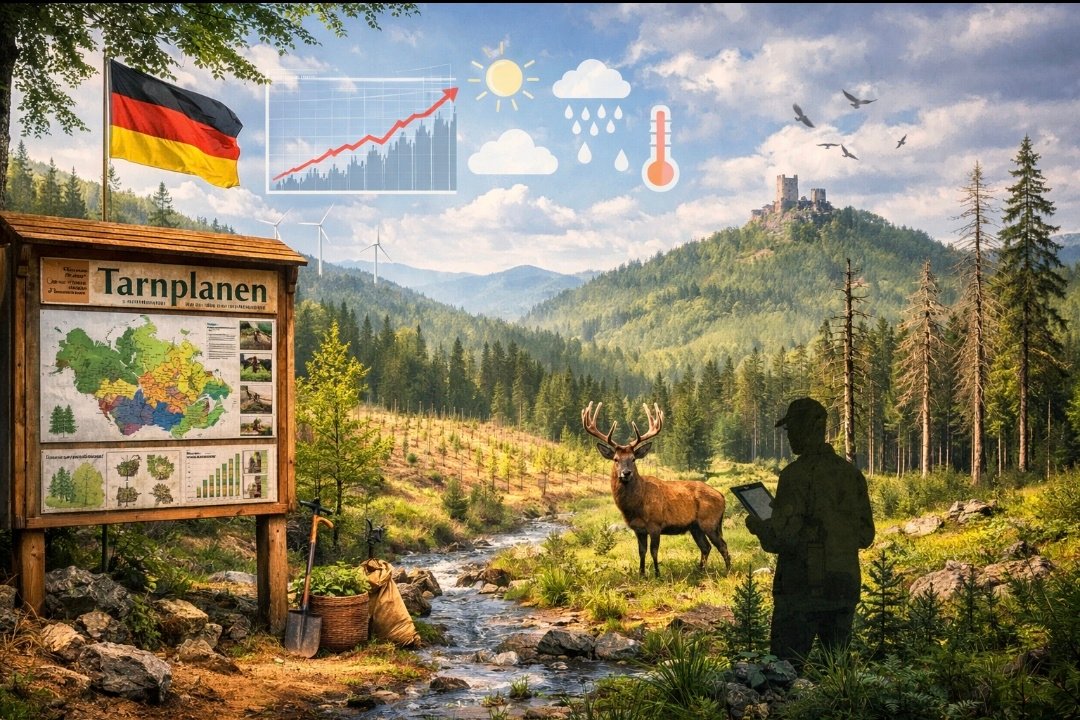
In the quiet but urgent conversations shaping Europe’s environmental future, one word has begun to echo with growing relevance: tarnplanen. It does not arrive with dramatic headlines or viral campaigns. Instead, it emerges from careful policy drafts, regional forest councils, sustainability boards, and local land Forest management meetings. Yet beneath its understated presence lies a powerful and forward-thinking vision—one that connects ecological restoration, climate resilience, and long-term land stewardship in a way that feels both practical and transformative.
Across Germany and parts of Central Europe, forests are changing. Climate stress, bark beetle infestations, drought cycles, and industrial land use have left scars that cannot be ignored. Traditional forestry models—once reliable and economically efficient—are now being questioned. In this shifting landscape, tarnplanen represents more than a technical plan. It symbolizes a strategic and ecological rethink of how forests are rebuilt, managed, and protected for future generations.
This article explores tarnplanen in depth: its origins, its philosophy, its environmental implications, and the quiet revolution it represents in sustainable land planning.
What Is tarnplanen?
At its core, tarnplanen refers to a structured ecological planning framework used in parts of Germany to guide forest regeneration and sustainable land restoration. The term is rooted in forestry and environmental policy language and broadly relates to coordinated reforestation strategies designed to restore damaged woodland areas while strengthening biodiversity and climate adaptability.
Unlike conventional replanting programs that simply replace lost trees with uniform species, tarnplanen emphasizes diversity, ecological balance, soil health, and long-term ecosystem resilience. It integrates environmental science, climate forecasting, and local land characteristics into one comprehensive restoration blueprint.
Tarnplanen is not a single document or one-size-fits-all model. Rather, it is a systematic planning approach adopted by regional forestry departments and environmental authorities. Its focus is on rebuilding forests in a way that reduces vulnerability to extreme weather, pests, and future environmental stressors.
Where older forestry systems often prioritized timber yield above ecological complexity, tarnplanen shifts the lens toward regeneration with foresight.
The Historical Context Behind Tarnplanen
To understand tarnplanen fully, one must look at Germany’s deep forestry traditions. The country has long been considered a pioneer in sustainable forest management. The concept of “Nachhaltigkeit,” or sustainability, originated in 18th-century German forestry, where timber harvesting was carefully calculated to avoid depletion.
However, post-industrial forestry in the 20th century leaned heavily toward monoculture plantations, particularly of Norway spruce. These forests were efficient for timber production but proved vulnerable to storms, drought, and bark beetle outbreaks. As climate change accelerated, weaknesses in monoculture forestry became painfully visible.
The severe storms of the late 1990s, followed by increasingly frequent drought years—especially from 2018 onward—caused widespread forest dieback. Entire stretches of spruce forests collapsed under heat stress and insect damage. This ecological crisis forced policymakers and forestry experts to reconsider long-standing models.
Tarnplanen emerged from this moment of reckoning. It was born not out of idealism alone but necessity. The future of forests required deeper resilience, scientific integration, and diversified planting strategies.
Ecological Philosophy: Beyond Simple Replanting
What sets tarnplanen apart is its ecological philosophy. It does not aim merely to replace what was lost. It seeks to rebuild smarter ecosystems.
Under tarnplanen, reforestation projects analyze soil composition, water retention capacity, regional microclimates, and future climate projections before determining which tree species should be planted. Mixed-species forests are prioritized, often combining native hardwoods with carefully selected climate-adaptive varieties.
The reasoning is straightforward yet profound. Biodiversity increases resilience. When forests contain varied species with different root depths, growth patterns, and resistance profiles, they are less likely to collapse under singular environmental threats.
This philosophy also recognizes forests as complex ecological systems rather than timber factories. Tarnplanen integrates wildlife corridors, understory regeneration, and natural succession processes into its planning framework. It respects the forest not just as a resource, but as a living network.
Climate Adaptation and Tarnplanen
Climate change sits at the heart of tarnplanen’s relevance. Rising temperatures, erratic rainfall, and prolonged droughts have destabilized forest ecosystems across Europe.
Tarnplanen incorporates predictive climate modeling into forest design. Planners assess which species are likely to survive projected temperature increases over the next fifty to one hundred years. Some traditionally dominant species are phased out in vulnerable regions, replaced with mixed stands that can tolerate heat and water scarcity.
This forward-looking strategy reduces future economic losses while enhancing carbon sequestration capacity. A diversified forest not only stores carbon more effectively but also maintains its absorption capacity during climate stress events.
The emphasis on long-term planning distinguishes tarnplanen from reactive environmental policies. It treats climate change not as an abstract future risk, but as a present operational reality.
Economic Implications and Sustainable Timber
While tarnplanen prioritizes ecology, it does not ignore economic reality. Forestry remains a significant sector in Germany, supporting rural employment and contributing to construction industries.
However, tarnplanen promotes a gradual shift toward sustainable timber harvesting. Instead of maximizing short-term yield, it balances productivity with ecosystem health. Selective logging practices are favored over clear-cutting. Long rotation cycles allow trees to mature fully, enhancing wood quality while maintaining forest integrity.
This balanced approach protects both economic stability and environmental function. In many regions, landowners initially hesitated at the longer planning timelines required under tarnplanen. Yet as climate-driven forest losses mounted, the financial logic of resilience became undeniable.
A forest that survives storms and drought ultimately proves more profitable than one repeatedly devastated.
Biodiversity Restoration and Wildlife Protection
One of the most compelling aspects of tarnplanen is its contribution to biodiversity restoration. Modern forestry practices often simplified ecosystems, reducing habitat diversity for wildlife. Tarnplanen reverses that trend.
By introducing mixed native species, maintaining deadwood habitats, and protecting natural regeneration zones, tarnplanen creates layered forest structures that support birds, insects, and small mammals. Pollinator populations, which have declined across Europe, particularly benefit from diversified woodland environments.
Additionally, ecological corridors are integrated into forest planning, allowing wildlife to migrate safely between habitats. This connectivity becomes increasingly important as species shift their ranges in response to warming climates.
Tarnplanen recognizes that a healthy forest is not defined solely by tree count, but by the life it sustains.
Soil Health and Water Management
Often overlooked in public discussions, soil health forms a critical pillar of tarnplanen. Drought damage revealed that many plantation forests had shallow root systems and compacted soils that limited water absorption.
Under tarnplanen, soil restoration techniques are applied before replanting begins. Organic matter enrichment, reduced heavy machinery use, and protection of natural forest floors improve moisture retention and microbial diversity.
Forests play a major role in regulating regional water cycles. By improving soil permeability and canopy diversity, tarnplanen strengthens groundwater recharge and reduces flood risks. In regions prone to heavy rainfall, this function proves especially valuable.
The relationship between forest structure and water stability is complex, but tarnplanen integrates these dynamics into its core strategy.
Community Involvement and Policy Integration
Tarnplanen is not implemented in isolation. It requires collaboration between government forestry offices, private landowners, environmental scientists, and local communities.
Public education campaigns often accompany large-scale forest restoration efforts. Citizens are informed about why certain species are being planted and why visible changes in forest appearance may occur. Transparency helps build trust and understanding.
At the policy level, tarnplanen aligns with Germany’s broader climate and biodiversity goals. It complements European Union environmental strategies focused on carbon neutrality and ecosystem restoration.
This integration ensures that forest planning does not operate separately from national climate commitments. Instead, it becomes a tangible expression of those commitments on the ground.
Challenges and Criticisms
No environmental strategy is without challenges. Tarnplanen faces logistical, financial, and political obstacles.
Long-term planning requires consistent funding, yet forestry budgets often compete with other public priorities. Climate modeling carries inherent uncertainty, meaning species selected today may still face unforeseen stressors decades from now.
Some critics argue that introducing non-native but climate-adapted species risks unintended ecological consequences. Others question whether economic pressures may eventually override ecological ideals.
Yet despite these concerns, the overall direction of tarnplanen reflects a deliberate attempt to learn from past mistakes rather than repeat them.
A Model for Other Nations?
As climate-driven forest degradation intensifies globally, the structured approach behind tarnplanen attracts international attention. Countries facing wildfire damage, insect infestations, or monoculture collapse can draw lessons from its emphasis on diversity and foresight.
The key insight lies not in copying species lists, but in adopting the planning philosophy itself. Tarnplanen demonstrates that forest restoration must be both ecological and anticipatory. Waiting for damage before acting proves far more costly than designing resilience from the start.
In this sense, tarnplanen may represent an evolving template for climate-adaptive forestry worldwide.
Conclusion
Tarnplanen stands at the intersection of tradition and transformation. Rooted in Germany’s long history of forestry management, it responds to modern environmental realities with clarity and ambition. It acknowledges that forests are no longer stable backdrops in a predictable climate. They are living systems under pressure, requiring thoughtful, science-driven restoration.
By emphasizing biodiversity, soil regeneration, climate modeling, and sustainable economics, tarnplanen offers a holistic path forward. It reframes reforestation not as an act of replacement, but as one of renewal with intelligence.
In an era where environmental policies often feel reactive and fragmented, tarnplanen provides something rare: a cohesive, long-term vision grounded in ecological respect and practical planning. Its strength lies not in dramatic rhetoric, but in steady, evidence-based commitment to rebuilding forests that can withstand the century ahead.
FAQs
What does tarnplanen mean in forestry terms?
Tarnplanen refers to a structured ecological planning approach used primarily in Germany to guide climate-adaptive forest regeneration and sustainable reforestation strategies.
Why was tarnplanen developed?
Tarnplanen emerged in response to widespread forest damage caused by storms, drought, and insect infestations, particularly affecting monoculture plantations vulnerable to climate stress.
How does tarnplanen differ from traditional reforestation?
Unlike traditional models that often replant uniform tree species, tarnplanen emphasizes biodiversity, soil health, climate forecasting, and long-term ecosystem resilience.
Is tarnplanen focused only on environmental protection?
No, it balances ecological restoration with sustainable economic forestry practices, ensuring forests remain both environmentally stable and economically viable.
Can tarnplanen be applied outside Germany?
While developed within the German forestry context, the underlying principles of tarnplanen—diversity, climate adaptation, and long-term planning—can inform forest restoration efforts globally.
READ MORE: Valplekar: The Hidden Tapestry of Heritage and Modern Meaning
Introduction
Across the vast landscape of ancient thought, certain words carry a depth that resists simple translation. They hold within them entire philosophies, subtle shifts in meaning, and echoes of civilizations long gone. One such word is poieno. Though not commonly discussed in everyday conversation, this term reaches back into classical Greek language and thought, where it shaped ideas about creation, artistry, and the human impulse to bring something into existence.
To understand poieno is to explore more than a definition. It is to enter a worldview in which making, forming, and expressing are not separate acts but deeply intertwined aspects of human identity. This concept influenced literature, philosophy, drama, and even political life in ancient societies. It continues to shape modern language in surprising ways, quietly embedded in words we use without thinking about their origins.
In this article, we will explore the meaning, history, philosophical weight, and cultural influence of poieno. By the end, you will see why this small word carries such extraordinary significance.
What Is poieno
The term poieno originates from the ancient Greek verb “ποιέω” (poieō), meaning “to make,” “to create,” or “to bring forth.” In transliteration, it appears in different forms depending on grammatical structure, and poieno reflects one such form tied to the act of doing or creating.
At its core, poieno expresses the action of making something that did not previously exist. This could refer to crafting an object, composing a poem, constructing a law, or even forming an idea. The word is dynamic rather than static. It does not describe an object; it describes the act of bringing something into being.
From this single root, many modern English words emerged. Poetry, poem, and poetics all trace their lineage to this ancient verb. When we speak of a poet today, we are referring, quite literally, to “a maker.” In its earliest sense, a poet was not merely someone who wrote verse, but someone who shaped language into new forms.
What makes poieno remarkable is that it does not limit creation to artistic work. In ancient Greece, the term could apply to lawmakers, craftsmen, and thinkers alike. To create was to shape reality itself.
The Historical Context of poieno
To truly grasp the power of poieno, we must step into the intellectual climate of ancient Greece. In that era, language was not merely a communication tool but a philosophical instrument. Words carried layered meanings that were debated in public forums, theaters, and academies.
In early Greek literature, including the epic works attributed to Homer, variations of poieō appear frequently. The word described actions ranging from building ships to composing songs. Creation was practical and imaginative at the same time.
Later, philosophers such as Plato and Aristotle deepened its conceptual meaning. For them, making was not simply physical labor; it involved intention and purpose. When a sculptor carved marble, he was not merely removing stone. He was actualizing a form that existed first in thought. In this sense, poieno became connected to the idea of potential becoming actual.
This philosophical shift was profound. It suggested that creation bridges the gap between imagination and reality. The act of making was an intellectual and almost spiritual event. Through poieno, ideas stepped into the world.
poieno and the Birth of Poetry
One of the most enduring legacies of poieno is its connection to poetry. In ancient Greece, a poet was called a “poiētēs,” meaning “maker.” Poetry was not considered decorative language; it was an act of creation that shaped cultural memory.
Epic poems preserved history, explained the origins of the world, and transmitted moral values. The poet was not merely entertaining an audience but constructing shared identity. Through rhythm and metaphor, the poet created meaning that resonated across generations.
Understanding this origin changes how we see creative writing today. When someone writes a poem, they are participating in a tradition that traces back to poieno. The creative act is not secondary to reality; it is a way of forming it. Words influence thought, and thought influences action.
This connection reveals why poetry held such authority in ancient society. It was not viewed as a hobby. It was a foundational act of shaping collective consciousness.
Philosophical Dimensions of poieno
Beyond art, poieno carried philosophical depth that continues to intrigue scholars. Aristotle made a distinction between “praxis” and “poiesis.” Praxis referred to action done for its own sake, such as ethical behavior. Poiesis, derived from the same root as poieno, referred to productive action aimed at creating something outside oneself.
This distinction highlights an essential insight. Some actions end in themselves, while others result in an external product. Poieno belongs to the second category. It describes purposeful making, where intention guides outcome.
This idea influenced later philosophical thought, including medieval and modern discussions about creativity and production. The notion that human beings are “makers” remains central to how we understand innovation and art.
When we design technology, compose music, or write literature, we participate in the same conceptual framework that poieno once described. The tools have changed, but the act of bringing forth something new remains the same.
poieno in Craftsmanship and Daily Life
While philosophical debates expanded its meaning, poieno was never confined to intellectual circles. In everyday life, it applied to craftsmen, builders, and artisans. A potter shaping clay or a carpenter constructing a door engaged in poieno just as much as a playwright composing tragedy.
This inclusive understanding of creation reflects a society that valued skilled labor alongside artistic genius. Making was honorable work. It required knowledge, discipline, and imagination.
The idea dissolves artificial boundaries between “high” and “low” forms of creation. A handcrafted table and a written epic both emerge from the same impulse to shape materials into meaningful forms.
In this sense, poieno offers a reminder that creativity is not rare or elite. It is woven into daily existence. Every act of shaping the world reflects human agency.
The Influence of poieno on Western Thought
The legacy of poieno extends far beyond ancient Greece. As Greek texts were translated into Latin and later into European languages, the concept of creative making traveled with them. The Latin word “facere,” meaning “to make,” often served as its counterpart, but the philosophical nuance remained rooted in Greek thought.
During the Renaissance, renewed interest in classical texts revived appreciation for the creative individual as a maker. Artists such as Michelangelo were celebrated not just as skilled workers but as visionaries who transformed imagination into reality.
Modern discussions about creativity, authorship, and innovation still carry traces of this ancient idea. When we speak of “creative industries” or “makerspaces,” we unconsciously echo the spirit of poieno.
The term’s influence is subtle but enduring. It shaped how Western culture understands art, invention, and even identity. To create is not merely to produce; it is to express a fundamental aspect of being human.
poieno and the Human Condition
There is something deeply human about the idea embedded in poieno. Unlike other creatures, human beings do not simply adapt to their environment. They transform it. They build cities, compose symphonies, and develop technologies that alter the course of history.
This drive to create suggests that making is not accidental but intrinsic. It connects imagination to action. It transforms thought into substance.
Psychologists have observed that creative activity often brings a sense of fulfillment and purpose. When people engage in meaningful creation, they report heightened focus and satisfaction. Though separated by centuries, this observation resonates with the ancient understanding of poieno.
The word reminds us that making is not only productive but transformative. It shapes the creator as much as the created object. In crafting something new, individuals refine their own identity.
Modern Relevance of poieno
In the contemporary world, where digital technology allows instant production and global distribution, the concept of poieno feels more relevant than ever. Creation no longer requires marble or parchment; it may involve code, digital art, or multimedia storytelling.
Yet the underlying principle remains unchanged. Whether designing software or writing a novel, the act of bringing something into existence carries weight. It reflects intention, imagination, and skill.
The modern “maker movement,” with its emphasis on hands-on innovation and community workshops, echoes ancient ideas about creation. It suggests that people crave tangible engagement with materials and ideas.
By revisiting poieno, we gain perspective on our own creative impulses. We see that our desire to build and express is not a recent trend but part of a long intellectual and cultural tradition.
Language, Meaning, and the Power of Making
Words shape how we think. The existence of poieno in ancient Greek reveals how central creation was to that culture’s worldview. When a society develops a nuanced term for making, it signals the importance placed on that activity.
Language does more than describe reality; it influences it. By naming the act of creation, ancient thinkers elevated it. They recognized that making is both practical and symbolic.
In our own time, rediscovering the layered meaning of poieno encourages us to approach creation with greater awareness. It invites reflection on the responsibilities that accompany making, whether in art, technology, or policy.
Creation carries consequences. What we bring into the world affects others. Understanding the philosophical roots of making can deepen our sense of accountability.
Conclusion
The word poieno may appear simple at first glance, but its historical and philosophical depth reveals a rich narrative about human creativity. Originating in ancient Greek thought, it captured the act of bringing something into existence, whether a poem, a tool, or a law.
Over centuries, the idea traveled through philosophy, art, and cultural transformation. It shaped our understanding of poetry, craftsmanship, and innovation. Even today, when we celebrate creators and makers, we echo its ancient resonance.
At its heart, poieno reminds us that creation is not merely production. It is an expression of imagination made real. It bridges thought and matter, intention and outcome. In recognizing this, we reconnect with a timeless truth: to create is to participate in shaping the world.
FAQs
What does poieno literally mean?
Poieno comes from the ancient Greek verb meaning “to make” or “to create.” It refers to the active process of bringing something into existence through intentional effort.
Is poieno related to the word poetry?
Yes, poetry and related terms such as poem and poetics derive from the same Greek root. In ancient Greece, a poet was considered a “maker,” someone who created meaning through language.
How is poieno different from general action?
In classical philosophy, making something with a specific outcome was distinguished from action done for its own sake. Poieno refers to productive creation that results in an external product.
Does poieno only apply to art?
No, the term historically applied to many forms of creation, including craftsmanship, lawmaking, and construction. It encompasses any deliberate act of bringing something new into existence.
Why is poieno still relevant today?
The concept remains relevant because human creativity continues to shape society. Whether in technology, literature, or design, the act of making reflects the enduring human impulse captured by poieno.
READ MORE: Microwey Revolution: Science Behind Modern Heating Power Era

Introduction
In a world overflowing with brands, identities, and emerging cultural symbols, few names spark curiosity quite like cavazaque. The word itself carries a certain rhythm, a sense of strength and distinction that invites questions. Is it a person, a movement, a brand, or something more abstract? Over time, cavazaque has grown beyond a mere name and evolved into a layered identity—one that blends innovation, ambition, and cultural nuance.
What makes cavazaque compelling is not just its presence, but its adaptability. It has appeared in conversations tied to creativity, entrepreneurship, digital culture, and even lifestyle identity. Rather than fitting into a narrow category, cavazaque represents an idea that shifts with context while maintaining a recognizable core. This flexibility has allowed it to resonate with diverse audiences, particularly those drawn to originality and bold expression.
Understanding cavazaque requires more than surface-level observation. It demands exploration into its origins, influence, symbolic power, and the way it connects with contemporary values. As we examine its journey, we uncover not just a name, but a narrative—one shaped by ambition, reinvention, and strategic positioning in an increasingly competitive landscape.
The Origins and Meaning Behind cavazaque
The origin of cavazaque is often discussed with a mix of intrigue and speculation. Unlike traditional names tied to specific regions or languages, cavazaque carries a constructed uniqueness. Its phonetic balance suggests intentional design. The smooth flow of syllables gives it memorability, while its distinct spelling prevents confusion with more common terms.
Names like cavazaque do not emerge accidentally. They are usually crafted with foresight, built to stand apart in saturated environments. Whether rooted in linguistic creativity or symbolic abstraction, cavazaque conveys authority and individuality. It feels modern, yet timeless. That duality is precisely what allows it to transcend boundaries.
Many believe the strength of cavazaque lies in its ambiguity. Because it is not rigidly defined, it becomes adaptable. In creative industries, this adaptability becomes an asset. It can represent a brand, a philosophy, or a visionary project without losing its identity. This open-ended quality invites interpretation rather than limiting it.
cavazaque as a Cultural Identity
Over time, cavazaque has evolved into more than just a name. It has become a statement. In digital spaces especially, identity plays a powerful role. People align themselves with symbols that reflect their aspirations and values. cavazaque has increasingly represented boldness, innovation, and a refusal to blend into the background.
In a culture that rewards visibility, distinctiveness matters. cavazaque carries a tone of exclusivity without arrogance. It feels intentional rather than accidental. This perception has helped it gain traction among creatives and forward-thinking individuals who see identity not merely as a label, but as a declaration.
The rise of personal branding has also contributed to its relevance. Today, individuals and enterprises alike understand the importance of building recognizable narratives. cavazaque fits seamlessly into this environment because it sounds crafted, strategic, and purposeful. It communicates ambition before a single explanation is offered.
The Strategic Power of a Unique Name
One of the most underestimated aspects of success in modern culture is naming. A name shapes perception long before experience confirms or denies it. cavazaque benefits from being unmistakably original. There is little risk of confusion, overlap, or dilution. In a competitive digital era, that alone is a powerful advantage.
But the power of cavazaque extends beyond uniqueness. It has emotional resonance. Strong names evoke feeling. They create curiosity. They spark memory. cavazaque accomplishes this through its rhythm and structure. It feels decisive. It carries weight.
Strategically, names like cavazaque function as anchors. They allow a concept or brand to expand without losing cohesion. Whether attached to creative ventures, digital platforms, or entrepreneurial initiatives, cavazaque holds space confidently. It does not rely on descriptive clarity; instead, it builds meaning through experience and repetition.
The Role of cavazaque in Modern Creativity
Creativity thrives on differentiation. In industries saturated with imitation, originality becomes currency. cavazaque aligns naturally with this principle. It feels custom-built for innovation. Its unfamiliarity invites attention, which is often the first step toward engagement.
Creative professionals are drawn to names that feel expansive rather than restrictive. cavazaque does not confine itself to a single medium or message. It can evolve alongside artistic expression, technological innovation, or business development. That flexibility allows it to remain relevant even as trends shift.
What truly strengthens cavazaque in creative circles is its emotional neutrality. It does not impose a predefined narrative. Instead, it allows creators to define what it means within their own framework. This collaborative dynamic between name and meaning fosters longevity.
Building Trust and Authority Through Identity
Authority is not built overnight. It is cultivated through consistency, clarity, and delivery. cavazaque, as an identity, demonstrates how a strong name can become synonymous with credibility when paired with meaningful action.
In any field, trust emerges from alignment between promise and performance. When cavazaque is associated with quality output, strategic thinking, or innovative solutions, the name itself begins to carry weight. Over time, repetition reinforces perception. The name transforms into shorthand for a set of expectations.
Interestingly, cavazaque avoids the trap of overexposure. Its strength lies partly in measured presence. Rather than flooding every channel indiscriminately, it appears intentional. That restraint enhances its perceived value. Scarcity, when genuine, deepens intrigue.
The Psychological Impact of cavazaque
There is psychology behind strong identities. Humans are naturally drawn to patterns that feel distinctive yet pronounceable. cavazaque satisfies this cognitive preference. It is unique, but not difficult. It stands out without being overwhelming.
Research in branding psychology shows that memorable names often contain a balance of familiar sounds and novel combinations. cavazaque exemplifies this balance. The familiarity of certain phonetic elements makes it approachable, while its unconventional structure ensures recall.
Moreover, cavazaque carries an implicit narrative of ambition. It does not sound passive or ordinary. The strength of its consonants and the flow of its vowels create a subtle impression of movement and progress. Even without explanation, it feels forward-facing.
Challenges and Misinterpretations
No emerging identity is immune to misunderstanding. cavazaque, because of its abstract nature, occasionally faces questions about clarity. Without context, some may struggle to categorize it. Is it personal? Corporate? Artistic?
Yet this ambiguity can also be reframed as opportunity. Rather than limiting cavazaque to one box, its open structure allows it to adapt. Misinterpretation often arises when audiences expect immediate classification. However, modern identity is increasingly fluid. cavazaque aligns with that shift.
Another challenge involves maintaining authenticity. When a name gains attention, there is always a risk of dilution through imitation. Protecting the integrity of cavazaque requires consistent vision and disciplined execution. Without that, even the strongest name can lose its sharpness.
The Future Potential of cavazaque
Looking ahead, cavazaque holds significant potential for expansion. Its flexibility makes it well-suited to digital innovation, global collaboration, and cross-industry application. Because it is not tied to a narrow niche, it can evolve alongside emerging opportunities.
The digital age rewards adaptability. Identities that remain rigid often struggle to survive change. cavazaque, by contrast, feels built for transformation. Its structure supports reinvention without sacrificing recognition.
The key to sustaining cavazaque lies in strategic growth. Expansion must remain aligned with core values of originality, confidence, and clarity. If those principles guide its development, cavazaque can solidify itself as more than a passing phenomenon. It can become a lasting emblem of creative ambition.
Conclusion
cavazaque is more than a name. It is a crafted identity that thrives on originality, adaptability, and strategic presence. In a landscape crowded with repetition, its distinctiveness stands out. From its phonetic strength to its psychological resonance, cavazaque demonstrates how thoughtful identity design can shape perception and influence.
Its journey reflects broader cultural shifts toward personal branding, creative independence, and global connectivity. The power of cavazaque lies not in rigid definition, but in its ability to hold meaning across contexts. It invites interpretation while maintaining cohesion.
As the modern world continues to evolve, names that combine flexibility with strength will dominate. cavazaque possesses both qualities. With careful stewardship and authentic execution, it has the potential to grow from intriguing concept to enduring legacy.
FAQs
What exactly is cavazaque?
cavazaque is a distinctive identity concept often associated with creativity, innovation, and strategic branding. It functions as a flexible name capable of representing diverse ventures or cultural ideas.
Why is cavazaque considered unique?
Its originality stems from its uncommon structure and phonetic balance. The name is memorable without being complicated, which gives it strong recognition potential.
Is cavazaque tied to a specific industry?
No, cavazaque is not confined to a single field. Its adaptability allows it to be used in creative industries, entrepreneurial projects, digital ventures, and more.
What makes cavazaque impactful in modern culture?
Its strength lies in its distinctiveness and emotional resonance. It conveys ambition and confidence, qualities that align with contemporary values of individuality and innovation.
Can cavazaque grow into a larger brand or movement?
Yes, with strategic direction and consistent vision, cavazaque has the structural flexibility and psychological appeal necessary to evolve into a broader and influential identity.
READ MORE: pyntekvister: Nature’s Quiet Art in Nordic Homes Revival Era

Introduction
The word tsunaihaiya has been steadily gaining attention in online spaces, cultural discussions, and emerging digital communities. At first glance, it appears mysterious, almost cryptic. Yet beneath its unfamiliar sound lies a layered narrative shaped by identity, creativity, and modern digital expression. Unlike many trends that flare up and disappear, tsunaihaiya has evolved into something more complex — a concept that carries emotional resonance and growing cultural weight.
Understanding tsunaihaiya requires patience. It is not simply a name, nor just a label attached to fleeting internet popularity. It represents a convergence of self-expression, personal branding, and the modern desire to create something unique in a crowded digital world. As attention spans shrink and online identities become increasingly curated, tsunaihaiya stands as an example of how distinctiveness can command curiosity.
This article explores tsunaihaiya from every angle: its background, its emergence, the personality and symbolism associated with it, and the reasons behind its growing relevance. Rather than treating it as a passing phenomenon, we will examine its deeper implications and what it reveals about contemporary culture.
The Origins of tsunaihaiya
The origins of tsunaihaiya are not neatly documented in traditional archives. Instead, they are woven into digital footprints — usernames, creative platforms, social threads, and independent artistic contributions. Unlike established public figures whose biographies are carefully recorded, tsunaihaiya grew organically, shaped by interaction rather than institutional recognition.
Many digital identities begin as experiments. A username becomes a persona, and over time that persona develops character, tone, and voice. In the case of tsunaihaiya, what began as a distinctive name slowly evolved into a recognizable presence. The uniqueness of the word itself contributed to its memorability. It carries a rhythmic flow that feels intentional, almost poetic, even without a widely agreed-upon definition.
Some observers interpret tsunaihaiya as an invented identity designed to stand apart in saturated digital spaces. Others view it as a symbolic expression of individuality. Regardless of its exact origin, the name has become a marker of originality. That originality, in today’s landscape, holds real value.
The Digital Identity Factor
Modern digital culture thrives on differentiation. Millions of creators compete for attention daily, yet only a handful manage to build lasting recognition. Tsunaihaiya stands out precisely because it does not follow conventional naming patterns. It resists easy categorization.
The power of tsunaihaiya lies in how it blends anonymity with presence. There is an intentional distance between the persona and personal details. That distance creates intrigue. Audiences often become more curious when information is scarce. Mystery, when managed carefully, can be a powerful tool.
In many ways, tsunaihaiya reflects a broader shift in how people construct identity online. Instead of presenting fully exposed personal narratives, some creators choose to build symbolic personas. These personas function almost like modern-day masks — expressive, creative, and strategic.
This approach allows for creative freedom. Without rigid biographical expectations, tsunaihaiya can evolve organically. The identity becomes fluid rather than fixed. That flexibility keeps audiences engaged because there is always room for reinterpretation.
Cultural Symbolism and Meaning
Even though tsunaihaiya does not have a universally recognized dictionary meaning, it carries emotional and cultural undertones. Its phonetic structure suggests softness and rhythm. It feels lyrical. That lyrical quality often resonates with audiences who value aesthetic identity.
Names matter. They shape perception before any content is consumed. Tsunaihaiya sounds unlike mainstream names tied to celebrity culture or corporate branding. It feels personal, almost handcrafted. That handcrafted impression aligns with the current demand for authenticity.
In contemporary culture, authenticity has become currency. People are drawn toward what feels unfiltered and distinct. Tsunaihaiya’s unconventional presence taps into that desire. It does not appear mass-produced. It feels deliberate.
Moreover, the name’s ambiguity invites interpretation. Some associate it with creativity, others with digital artistry, and still others with self-exploration. This openness allows tsunaihaiya to serve as a mirror, reflecting the values of those who engage with it.
The Rise of Recognition
Recognition rarely happens overnight. In the case of tsunaihaiya, visibility seems to have grown gradually. Subtle engagement patterns, mentions in online communities, and curiosity-driven searches all contributed to its spread.
Digital ecosystems reward distinctiveness. When a name sparks curiosity, it encourages sharing. Curiosity leads to conversation, and conversation leads to visibility. Tsunaihaiya benefits from this cycle.
What makes its rise particularly interesting is the absence of heavy traditional promotion. Instead of relying on conventional publicity methods, the growth appears community-driven. This organic expansion gives tsunaihaiya credibility. Audiences tend to trust identities that grow naturally rather than those that feel artificially amplified.
Another factor in the rise of tsunaihaiya is adaptability. The digital world changes rapidly. Trends shift, algorithms evolve, and audience expectations fluctuate. An identity that remains flexible can survive these shifts. Tsunaihaiya seems built for adaptability.
Psychological Appeal
To understand the deeper appeal of tsunaihaiya, one must consider psychology. Humans are naturally drawn to mystery. When something is not fully explained, the mind seeks completion. Tsunaihaiya leverages that instinct.
There is also a sense of empowerment embedded within such an identity. It represents self-definition rather than imposed categorization. In a world where labels are often assigned quickly, tsunaihaiya stands as self-created.
This self-creation resonates especially with younger audiences who value autonomy. The digital age has given individuals the tools to shape their own narratives. Tsunaihaiya embodies that possibility.
Additionally, the fluidity of the identity reduces pressure. Without rigid expectations, it can explore multiple creative directions. That freedom fosters longevity. Audiences appreciate evolution when it feels authentic rather than forced.
Influence on Digital Culture
Even subtle identities can influence broader digital culture. Tsunaihaiya contributes to a larger movement where personal branding shifts away from traditional celebrity frameworks and toward independent symbolic representation.
Instead of focusing on public milestones or mainstream accolades, the impact lies in engagement quality. Conversations around tsunaihaiya often revolve around uniqueness and individuality. That conversation itself becomes influence.
Influence today is not only about numbers. It is about resonance. Tsunaihaiya resonates because it represents something people aspire to: the courage to stand out without seeking approval from established systems.
This influence extends beyond immediate followers. It shapes how others approach naming, branding, and digital self-expression. In that sense, tsunaihaiya functions less like a static entity and more like a catalyst.
Challenges and Criticism
No rising identity exists without skepticism. Some critics argue that ambiguous digital personas lack substance. They question whether intrigue alone can sustain long-term relevance.
Such criticism highlights an important tension in modern digital culture. Substance must eventually accompany mystery. While tsunaihaiya benefits from curiosity, sustained relevance depends on continued creative contribution.
However, ambiguity does not necessarily mean emptiness. Sometimes it reflects intentional design. By avoiding oversharing, tsunaihaiya maintains narrative control. That control can be strategic rather than evasive.
Navigating criticism requires balance. Too much exposure can dilute mystique, yet too little can limit connection. Tsunaihaiya appears to operate within that delicate space, adjusting as audience expectations evolve.
The Future of tsunaihaiya
Predicting the future of any digital identity is challenging. Trends are unpredictable, and audience interests shift quickly. However, certain qualities suggest longevity.
Tsunaihaiya’s distinctiveness provides a strong foundation. Its flexibility allows for reinvention. Most importantly, its growth has been organic rather than artificially inflated.
As digital spaces continue to diversify, identities that prioritize originality are likely to remain relevant. Tsunaihaiya has the advantage of not being confined to a single niche. That adaptability can open doors to new creative directions.
The key to sustained impact will be depth. If tsunaihaiya continues to evolve thoughtfully, it can transform from a rising presence into a lasting symbol of independent digital identity.
Conclusion
Tsunaihaiya is more than an unusual word circulating online. It represents a modern approach to identity — one that values uniqueness, controlled mystery, and organic growth. In a digital world often saturated with repetition, tsunaihaiya stands apart through its distinctiveness.
Its rise reflects broader cultural shifts toward self-defined personas and creative autonomy. While some may question its ambiguity, that very ambiguity fuels curiosity and engagement. The balance between mystery and meaning has allowed tsunaihaiya to carve out its own space.
Ultimately, tsunaihaiya reminds us that influence does not always require conventional structure. Sometimes, originality itself is enough to command attention. And in an era defined by constant noise, standing out quietly can be the most powerful strategy of all.
FAQs
What is tsunaihaiya known for?
Tsunaihaiya is known for its distinctive digital identity and growing recognition in online communities. It represents originality and creative self-expression rather than traditional celebrity status.
Is tsunaihaiya a real person?
Tsunaihaiya functions more as a digital persona or identity than a publicly documented individual. Detailed personal information is not widely available.
Why has tsunaihaiya gained attention?
Its uniqueness, mysterious presentation, and organic growth have sparked curiosity. People are naturally drawn to identities that stand apart from mainstream patterns.
Does tsunaihaiya have a specific meaning?
There is no universally accepted definition. Its meaning is shaped largely by interpretation, creativity, and the emotional resonance audiences attach to it.
What does the future hold for tsunaihaiya?
If it continues evolving with authenticity and creative depth, tsunaihaiya has the potential to maintain long-term relevance within digital culture.
READ MORE: Protocolo Operacional Padrao: The Complete 2025 Guide

Mobilesrus: Inside the Modern Mobile Marketplace and Why It Matters

Elaine Starchuk: Fame, Privacy, and Reinvention

heidi van pelt: A Life Beyond Fame and Controversy Story Arc

هنتاوي com: The Ultimate Arabic Anime & Entertainment Platform

Elizabeth Fraley Kinder Ready Court Case Uncovered

Inside the Truth About gina carano husband
-

 Blogs1 week ago
cavazaque: The Rise, Identity, and Untold Legacy
-
 Celebrity1 week ago
dallas yocum: The Untold Story of a Private Life Revealed!!!
-

 Tech1 week ago
Gelboodu: Inside the Global Anime Imageboard and Creative Hub
-

 Tech1 week ago
Zavalio com: Exploring the Rising Digital Content Hub of 2026
-
 Celebrity1 week ago
heidi van pelt: A Life Beyond Fame and Controversy Story Arc
-
 Culture1 week ago
Valplekar: The Hidden Tapestry of Heritage and Modern Meaning
-

 Celebrity1 week ago
vivian ridge: The Untold Story Behind Bob Ross and HerLegacy
-

 Tech1 week ago
Microwey Revolution: Science Behind Modern Heating Power Era